Common Skin Conditions: Symptoms and What to Do
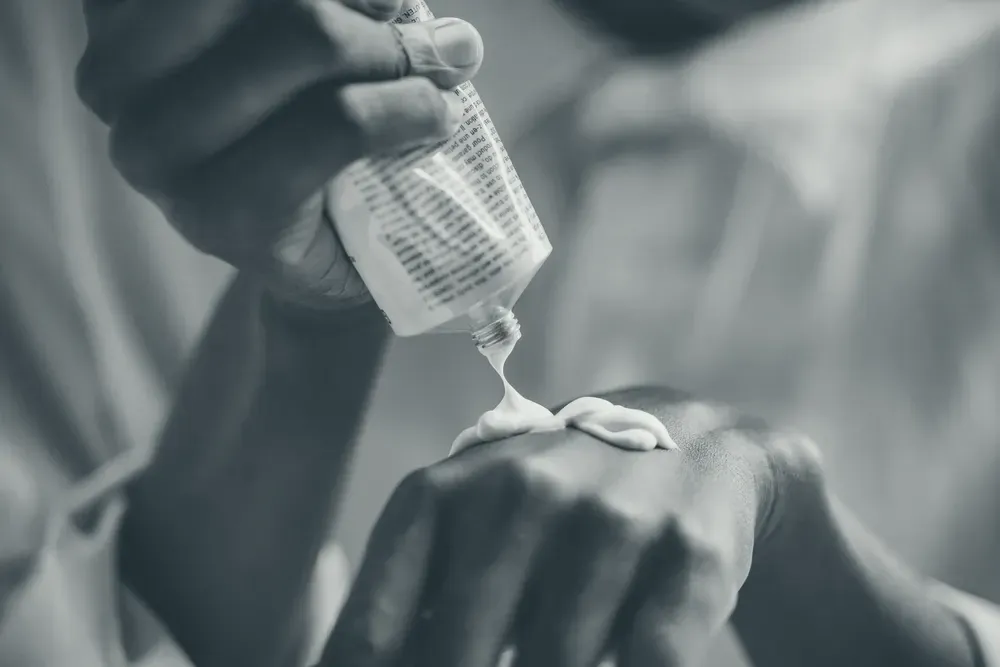
Most skin complaints come down to a short list of symptoms: itching, redness or discoloration, scaling, dryness, and patches that are lighter or darker than the skin around them. What separates one condition from another is rarely a single symptom — it is the combination, where on the body it sits, and what sets it off.
The symptoms that show up almost everywhere
- Itch (pruritus) — the single most common skin symptom, and the least specific. It appears in eczema, psoriasis, fungal infection, allergic reactions and plain dry skin.
- Redness or discoloration — the visible face of inflammation. On lighter skin it reads as red or pink; on brown and black skin the same inflammation often reads as violet, gray or darker brown, which is one reason skin disease is under-diagnosed in people of color.
- Scaling — skin shedding in flakes or plates, typical of psoriasis, seborrheic dermatitis and some fungal infections.
- Dryness and cracking — a barrier problem, whether from weather, over-washing, or a chronic condition underneath it.
- Pale or white patches — pigment either blocked or lost.
- Small blisters — often a contact reaction or dyshidrotic eczema.
- Nail changes — pitting, thickening, or a nail lifting off its bed.
Sorting the most common conditions apart
| What you notice most | What it usually points to |
|---|---|
| Intense itch, dry skin, nothing visible | Dry skin, early dermatitis, or an internal cause |
| Itch and rash in the bends of elbows and knees | Atopic dermatitis (eczema) |
| Redness and blisters exactly where a product touched | Contact dermatitis |
| Thick plaques with silvery scale on elbows, knees, scalp | Psoriasis |
| Ring-shaped scaly patch, or itching between the toes | Fungal infection (tinea) |
| Flaking and redness on scalp, eyebrows, sides of the nose | Seborrheic dermatitis |
| Pale patches, more obvious after sun | Tinea versicolor or vitiligo |
The table narrows the suspicion; it does not close it. Several of these look nearly identical in the first week, which is exactly why a dermatologist looks at distribution and history rather than at one patch in isolation.
What actually causes skin problems
- Genetics and immune function. NIAMS attributes atopic dermatitis to a combination of gene variants affecting skin proteins, immune system dysfunction, and environmental exposure — and says plainly that no one knows the single cause. Psoriasis is immune-mediated in the same way.
- Contact with an irritant or allergen. Soaps, solvents, fragrances, nickel and poison ivy are the usual suspects.
- Infection. Dermatophyte fungi and Malassezia yeast both live off the skin surface and overgrow in warm, damp conditions.
- Loss of pigment. In vitiligo the immune system destroys melanocytes, the cells that make pigment.
- Environment and habits. Dry air, long hot showers, harsh cleansers and unprotected sun exposure make nearly every condition on this list worse.
What to do when skin acts up
- Write down the pattern — where it started, how long it has been there, and what makes it worse. That history is worth more to a dermatologist than a photo.
- Stop scratching. Scratching breaks the barrier, invites bacterial infection, and in chronic itch it creates the very rash that was not there to begin with.
- Moisturize, daily and right after bathing, especially for anything dry or itchy.
- Do not run long courses of a store-bought steroid cream on your own. It can blur the picture a doctor needs to see and thin the skin over time.
- Get a diagnosis before a treatment. Antifungal cream does nothing for eczema, and steroid cream can make a fungal infection spread.
Warning signs that deserve faster attention
Seek care promptly if there are signs of bacterial infection (pus, warmth, significant swelling), fever alongside the rash, severe pain, a rash spreading quickly over hours, or any spot that changes size, color or shape in a short time.
This content is informational and does not replace a medical consultation, diagnosis, or treatment. Read the detail on dermatitis symptoms, eczema symptoms, psoriasis symptoms, fungal skin infection symptoms, white spots on skin, and itchy skin with no rash.
Frequently asked questions
How common are skin conditions in the United States?
Very. The American Academy of Dermatology reports that acne alone affects up to 50 million Americans a year, atopic dermatitis affects nearly 1 in 10 Americans of all ages, and psoriasis affects roughly 7.5 million people.
Can skin itch with nothing visible on it?
Yes. Dry skin, an early flare of dermatitis and a handful of internal conditions can all itch before, or without, any rash showing up. MedlinePlus advises seeing a provider when itching is severe, lasts more than a few weeks, or has no obvious cause.
Should a rash that lasts two weeks be checked?
It is a reasonable threshold. A rash or itch that has not improved in two weeks of basic care, is spreading, hurts, or is costing you sleep is worth a dermatologist visit rather than another store-bought cream.
Do eczema and psoriasis ever look alike?
They can, especially early on. Psoriasis tends to build thick plaques with silvery-white scale on elbows, knees and scalp; eczema tends to be drier, less sharply bordered, and sits in the bends of the body. Nail pitting points to psoriasis.
Are pale patches on the skin a sign of something serious?
Usually not. The two most frequent explanations are tinea versicolor, a superficial yeast overgrowth, and vitiligo, an autoimmune loss of pigment. Neither is dangerous, but they are treated in completely different ways, so the label matters.
Sources
- Skin Conditions — MedlinePlus, U.S. National Library of Medicine
- Skin conditions by the numbers — American Academy of Dermatology
- Atopic Dermatitis — NIAMS, National Institutes of Health
Written by Lucas Silva · Reviewed by Lucas Silva · Updated on August 14, 2026