Fever Causes: What It Means and When to Worry
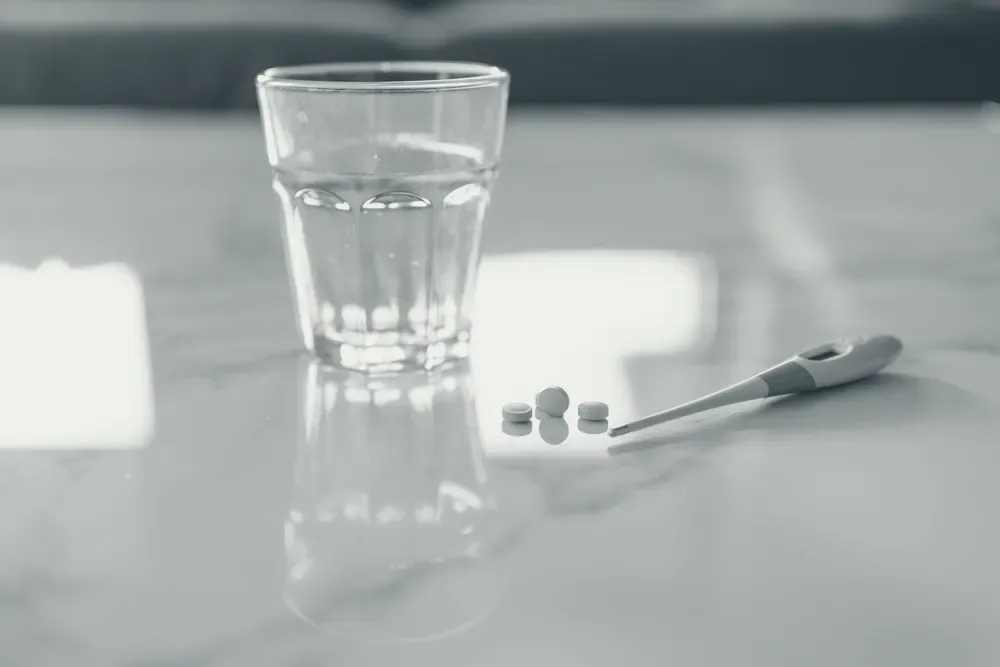
Fever is a body temperature raised on purpose. MedlinePlus sets the line at 100.4 °F (38 °C) measured rectally, 99.5 °F (37.5 °C) by mouth, and 99 °F (37.2 °C) under the arm; for adults, an oral reading above 99 °F to 99.5 °F (37.2 °C to 37.5 °C) qualifies depending on the time of day. Almost always it means the immune system has met something and is responding.
Why the body does it
StatPearls describes the mechanism cleanly. Exogenous pyrogens — bacteria, viruses — trigger endogenous pyrogens including interleukins, TNF, and interferon. Those raise production of prostaglandin E2, which acts on the hypothalamus and moves the body’s temperature set point upward. Everything after that is the body defending its new target: shivering, vasoconstriction, cold hands, the urge to pile on blankets.
MedlinePlus adds the reason this is useful: most bacteria and viruses that infect people do best at 98.6 °F (37 °C). Raising the thermostat is not a malfunction.
What actually causes fever
MedlinePlus groups the causes:
- Infections — colds and other respiratory illnesses through to pneumonia and tuberculosis, urinary tract infections, viral and bacterial gastroenteritis, and infections of bone, skin, or an organ, including meningitis and appendicitis.
- Immunizations, which commonly produce a short low fever.
- Teething, which can raise the temperature slightly but does not produce a real fever.
- Autoimmune and inflammatory disorders — several forms of arthritis, inflammatory bowel disease, vasculitis.
- Cancers, particularly lymphoma and leukemia, which can present with fever first.
- Medications, and blood clots.
Day to day, the first bullet accounts for nearly all of it.
How high the number can go
Two figures from MedlinePlus that reset most people’s fear:
| Temperature | What it means |
|---|---|
| 100.4 °F (38 °C) | The threshold — a fever begins |
| 105 °F (40.6 °C) | Untreated fevers from infection seldom go above this |
| 107.6 °F (42 °C) | Below this, brain damage from fever generally does not occur |
That gap is the point. A fever from an infection is a self-limiting process with a ceiling. What clinicians watch is how the person looks, how long the temperature has been up, and what else is happening — not how far up the scale it went. For the conversion table and how much the reading shifts by where you take it, see fever: Fahrenheit to Celsius.
The one exception: age
Age overrides all of the above. The American Academy of Pediatrics tells parents to call immediately for an infant younger than 3 months (12 weeks) with a temperature of 100.4 °F (38.0 °C) or higher, whatever else is or is not going on. At that age fever is investigated, not watched. See fever in a baby: what to do.
Care at home
- Fluids first. Water, soup, ice pops. MedlinePlus suggests limiting fruit juice and sports drinks in young children.
- Fewer layers, not more. Remove excess clothing and blankets; a shivering child gets one blanket, not three.
- Fever reducers by weight and age. Acetaminophen every 4 to 6 hours; ibuprofen every 6 to 8 hours, not for infants under 6 months; aspirin for adults only.
- Skip the cold bath. Cold baths, ice, and alcohol rubs cause shivering, which raises temperature rather than lowering it.
- Do not force food.
When to contact a professional
For a child, MedlinePlus says contact a provider if the child is 3 months or younger with a rectal temperature of 100.4 °F (38 °C) or higher; 3 to 12 months with a fever of 102.2 °F (39 °C) or higher; 2 years or younger with a fever lasting more than 24 to 48 hours; older with a fever lasting more than 48 to 72 hours; has a fever of 105 °F (40.5 °C) or higher that does not come down with treatment; or has fevers coming and going for a week or more.
For an adult, the triggers are a fever of 105 °F (40.6 °C) or higher that does not respond, a fever holding at or above 103 °F (39.4 °C), a fever lasting longer than 48 to 72 hours, recurring fevers over more than a week, a serious chronic condition or weakened immunity, a new rash or bruising, painful urination, or recent international travel.
Call 911 for inconsolable crying, unresponsiveness or confusion, inability to walk, trouble breathing, blue lips, tongue or nails, a severe headache, a stiff neck, inability to move a limb, or a seizure.
This content is informational and does not replace medical evaluation, diagnosis, or treatment. For the specific situations, see high fever in kids: when to worry, low grade fever causes, and fever with no other symptoms, and fever and body aches when the two arrive together.
Frequently asked questions
What temperature counts as a fever?
MedlinePlus gives 100.4 °F (38 °C) rectally, 99.5 °F (37.5 °C) orally, and 99 °F (37.2 °C) under the arm for children. For adults, an oral reading above 99 °F to 99.5 °F (37.2 °C to 37.5 °C) counts, depending on the time of day.
Is fever a disease?
No. It is a regulated response — StatPearls describes pyrogens raising the hypothalamic set point, which then defends the higher temperature. The question worth asking is what triggered it, not how to erase the number.
Can a fever cause brain damage?
MedlinePlus states that brain damage from a fever generally will not occur unless the fever is over 107.6 °F (42 °C), and that untreated fevers from infection seldom go above 105 °F (40.6 °C).
Should I take medicine every time I have a fever?
Not necessarily. Fever reducers treat discomfort, not the illness. If you are drinking, resting, and functioning, there is no threshold that obliges you to medicate — and there is no evidence that suppressing fever speeds recovery.
What is the difference between fever and hyperthermia?
In fever the hypothalamus raises the set point and the body defends it. In hyperthermia the core temperature rises past the set point because heat cannot be shed — heat exposure, exertion, some drugs. Fever reducers do not help hyperthermia; cooling does.
Sources
- Fever — MedlinePlus Medical Encyclopedia (A.D.A.M., Inc.)
- Fever — StatPearls, NCBI Bookshelf
- Fever and Your Baby: When to Call the Pediatrician — American Academy of Pediatrics (HealthyChildren.org)
Written by Lucas Silva · Reviewed by Lucas Silva · Updated on August 14, 2026