Mumps Symptoms: Swelling, Timeline and Warning Signs
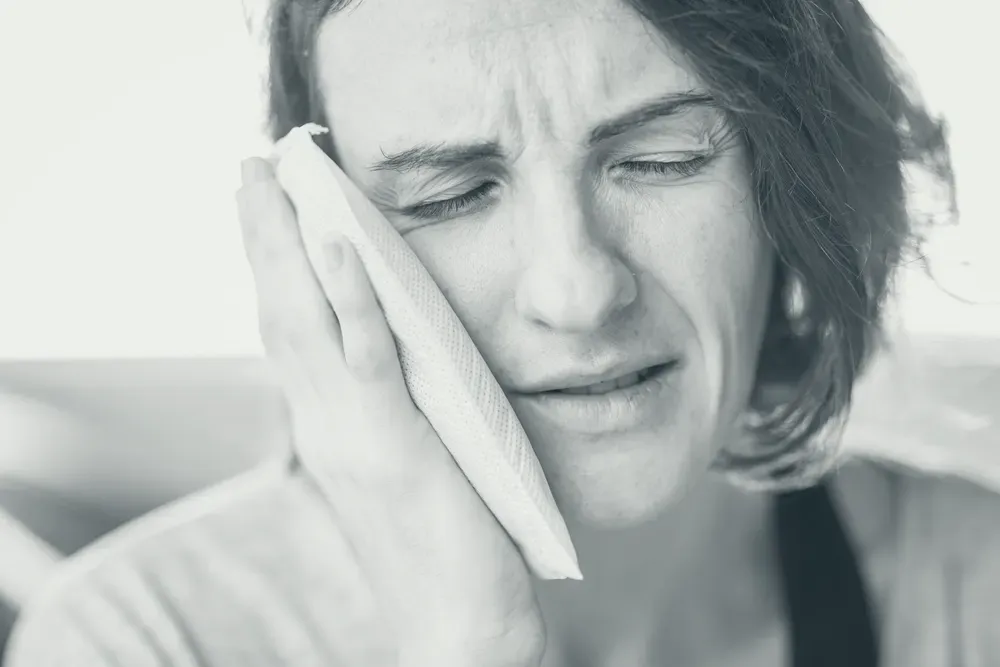
Mumps opens with a prodrome — headache, fever, fatigue, loss of appetite and general malaise — and the recognizable swelling follows a few days later. That swelling is parotitis: painful inflammation of the area between the earlobe and the angle of the jaw. StatPearls reports it in over 70% of infections, usually on both sides, though one side alone happens.
The sequence, in order
- Exposure, then nothing for 12 to 25 days.
- Prodrome: fever, headache, tiredness, no appetite, aching.
- Parotitis, appearing in the following days — the jaw and the space under the ear swell and hurt, and chewing and swallowing become uncomfortable.
- Resolution: the gland swelling most often subsides within a week; MedlinePlus describes the swelling as lasting 7 to 10 days.
The AAP adds earache and difficulty talking to the symptom list, along with occasional vomiting and joint pain.
A third of infections are invisible
Up to one-third of infected people have no symptoms at all — and they are contagious. The AAP puts the figure at about 1 in 5 unvaccinated infected people with no symptoms. Either way, the practical consequence is the same: absence of a swollen face does not rule mumps out of a household, and it does not rule out transmission.
The contagious window is 2 days before symptoms start through 5 days after onset. That is why isolation is measured from the day the swelling appeared, not from the day of diagnosis.
Not every swelling near the ear is mumps
Bacterial parotitis, salivary stones, swollen lymph nodes and dental infection all produce swelling in roughly the same place, and each has a different signature — swelling that flares at mealtimes points to an obstructed duct, not a virus. The comparison is laid out in swelling near ear causes.
Complications worth knowing about
Orchitis is the most common complication after parotitis, occurring in about 1 in 5 cases of mumps among post-pubertal males. Aseptic meningitis, encephalitis, pancreatitis, oophoritis and mastitis all occur, and deafness — mumps was once the most common cause of acquired deafness in the United States — is rare but documented. The risk profile differs sharply by age, which is why the presentations are split into mumps in children symptoms and mumps in adults symptoms.
Prevention: the MMR schedule
The AAP schedule is two doses of MMR — the first at 12 to 15 months, the second at 4 to 6 years. A third dose is recommended for people already given two doses who are at increased risk during a community outbreak; studies found a 61% to 88% lower attack rate in third-dose recipients than in two-dose recipients.
When to seek care
Call a clinician for parotid swelling with fever, for severe testicular pain, for severe abdominal pain, and for severe headache with neck stiffness, drowsiness or confusion. In an infant under 3 months, a rectal temperature of 100.4 °F (38 °C) or higher is an immediate call on its own; the AAP’s thresholds are 101 °F (38.3 °C) between 3 and 6 months and 103 °F (39.4 °C) after 6 months.
This content is informational and does not replace medical consultation, diagnosis, or treatment.
Frequently asked questions
How long after exposure do symptoms appear?
The incubation period runs 12 to 25 days. That long window is why the source of an infection is so often impossible to identify — the contact that caused it happened two to three weeks before anyone noticed anything.
Can you have mumps without the swollen face?
Yes. StatPearls reports parotitis in over 70% of infections, meaning a substantial minority never swell, and up to one-third of infected people have no symptoms at all while remaining contagious.
How long is a person contagious?
StatPearls gives 2 days before symptom onset through 5 days after. The AAP frames the practical rule the same way: stay home from school, child care and group activities for at least 5 days from the moment the swelling started.
Is there a treatment that shortens mumps?
No antiviral treats it. Care is rest, fluids and soft, non-citrus foods while the glands are sore. The swelling itself usually subsides within a week.
Can someone who was vaccinated still get mumps?
Yes, and most U.S. outbreak cases in recent decades have been in vaccinated people. Two MMR doses are about 86% effective against mumps, so a minority remain susceptible, and immunity appears to wane over the years.
Sources
- Mumps — StatPearls, NCBI Bookshelf
- What to Know About Mumps — American Academy of Pediatrics, HealthyChildren.org
- Mumps — MedlinePlus, National Library of Medicine
- Fever and Your Baby — American Academy of Pediatrics, HealthyChildren.org
Written by Lucas Silva · Reviewed by Lucas Silva · Updated on August 14, 2026